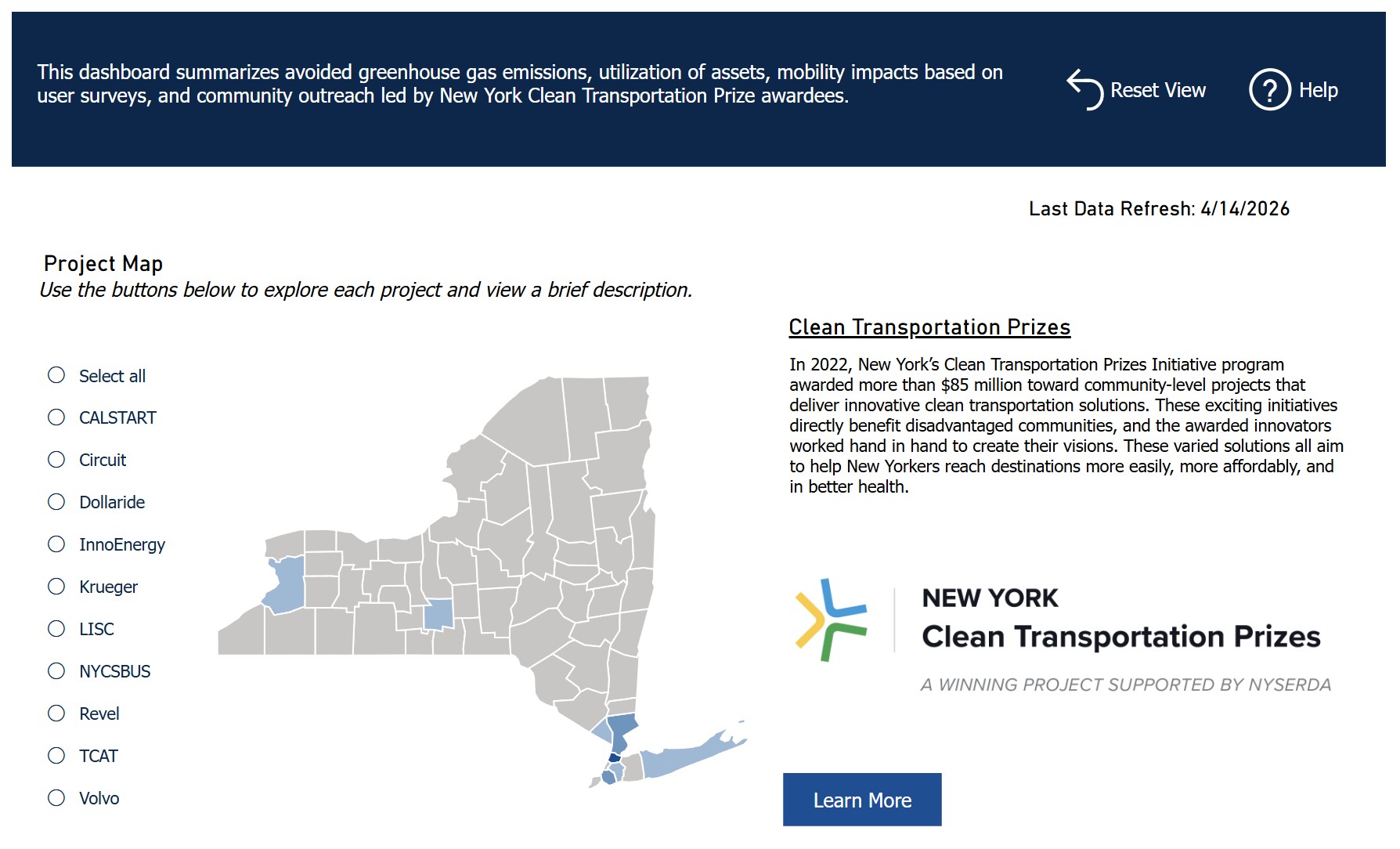
New York’s Clean Transportation Prizes Initiative is a one-of-a-kind program aimed at demonstrating green transportation solutions. With $85 million in prizes, the program is helping communities across New York. As a key partner of the program implementation team, Atlas Public Policy has created this webpage to summarize progress made by winning teams. In particular, the dashboard assembles several data categories reported by the project teams and is intended to quickly deliver visitors with insights on the progress made by the prize winners.
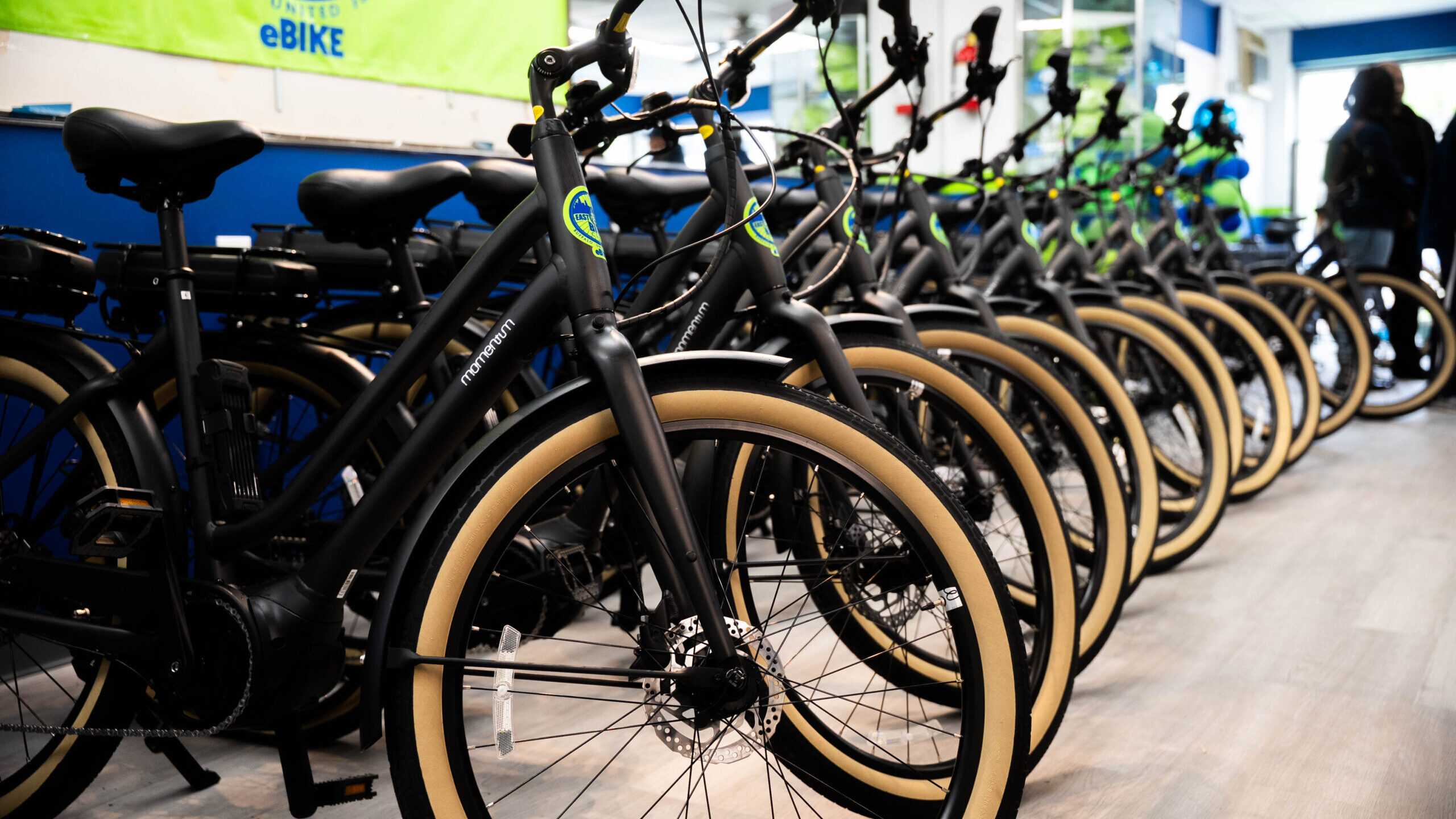
LISC ebike library
"The East Side Bike club has made transportation fun and affordable. Our community appreciates this and truly needed this."
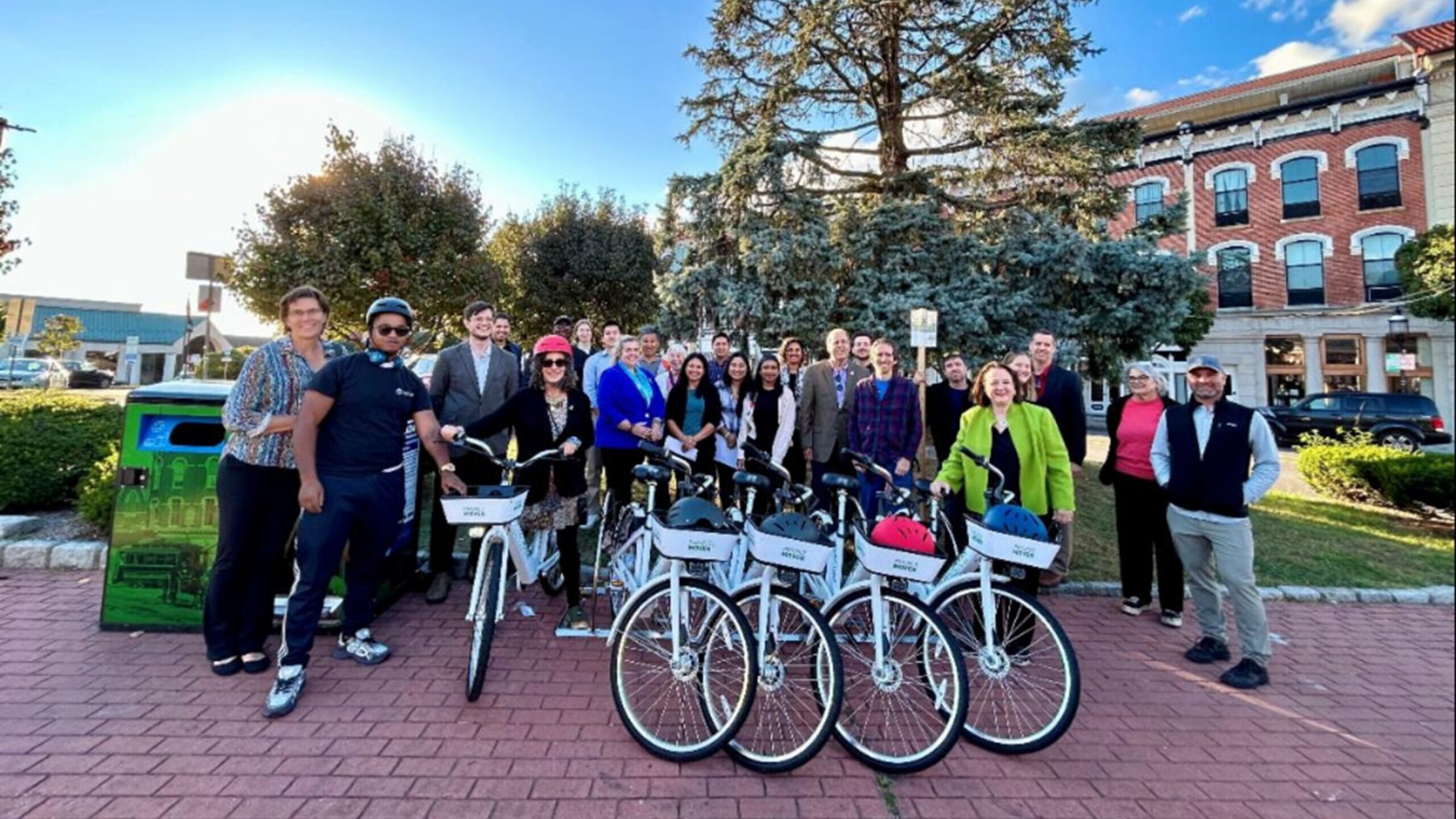
InnoEnergy Bikeshare Launch
“Project Mover is the best! Significantly higher quality of life since it was rolled out - makes it easy and fun to go anywhere in town.”
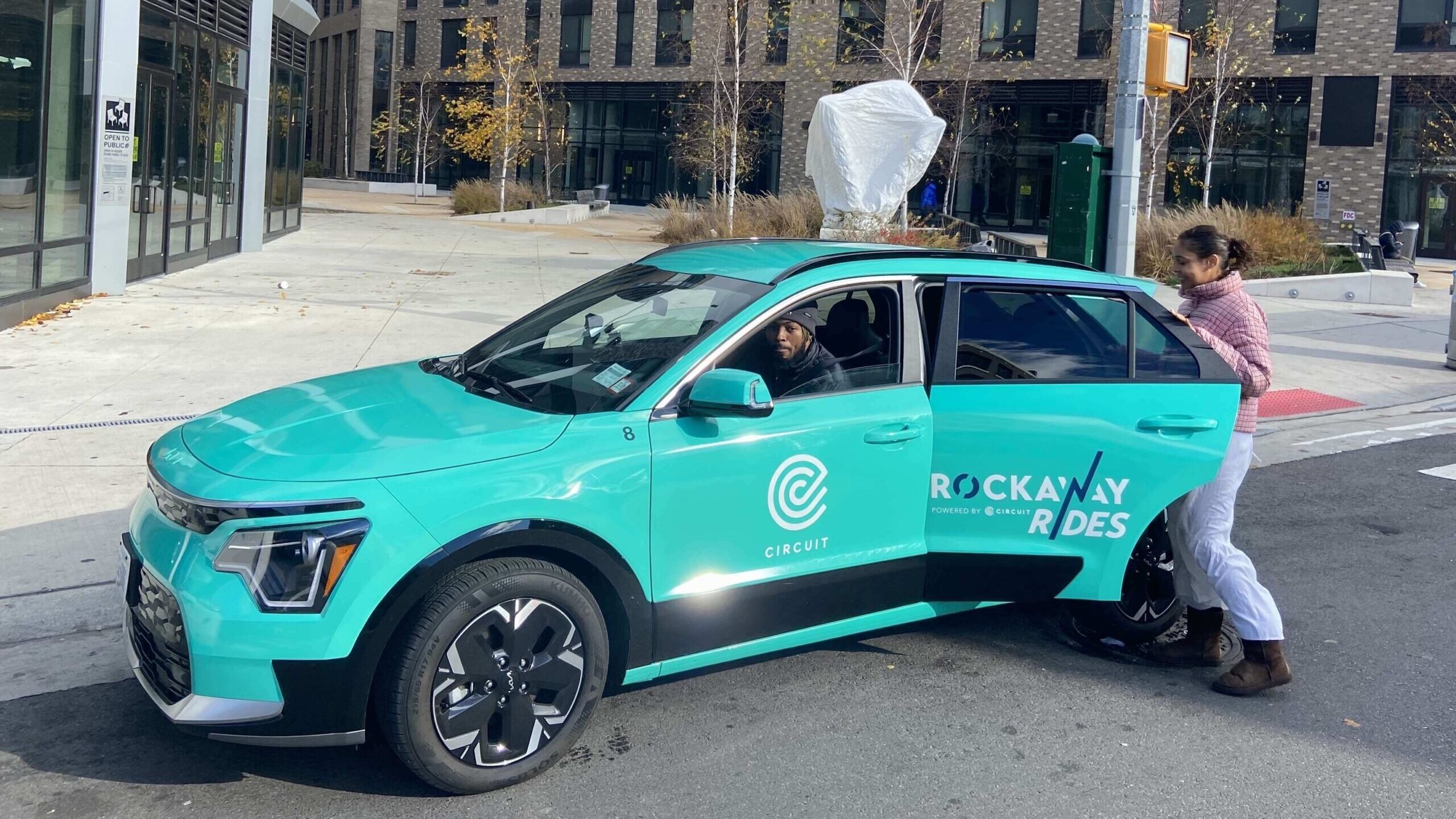
Circuit- Rockaway Launch December 2023
“I really enjoy using the Circuit Shuttle service as someone who doesn’t have a car and loves to help the environment. I hope it continues!”
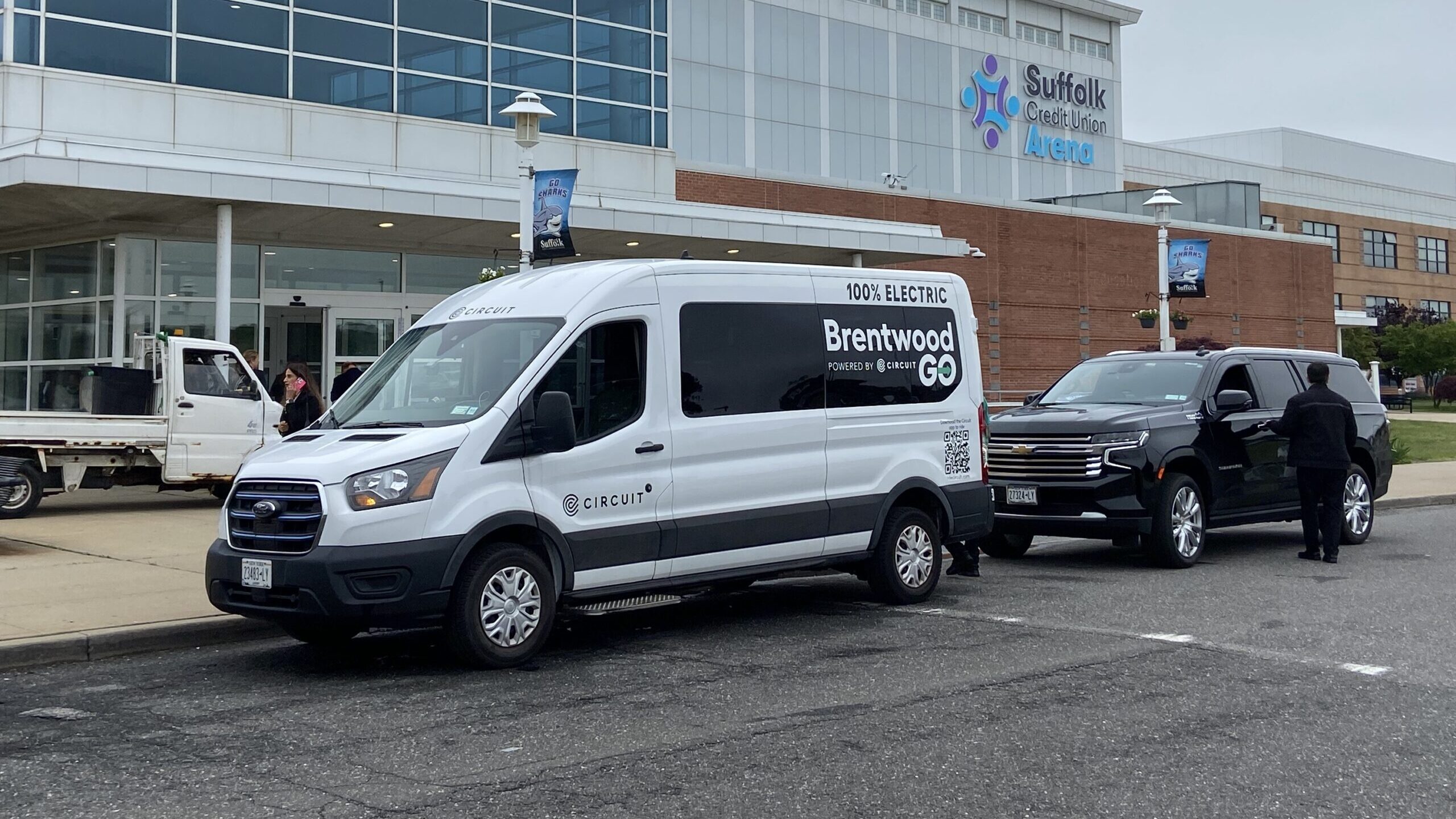
Circuit HIA Show Van Shuttle
“The circuit service has made it very conveniently to travel in the rockaways and get things done. Many of my family members and friends use it to get places”
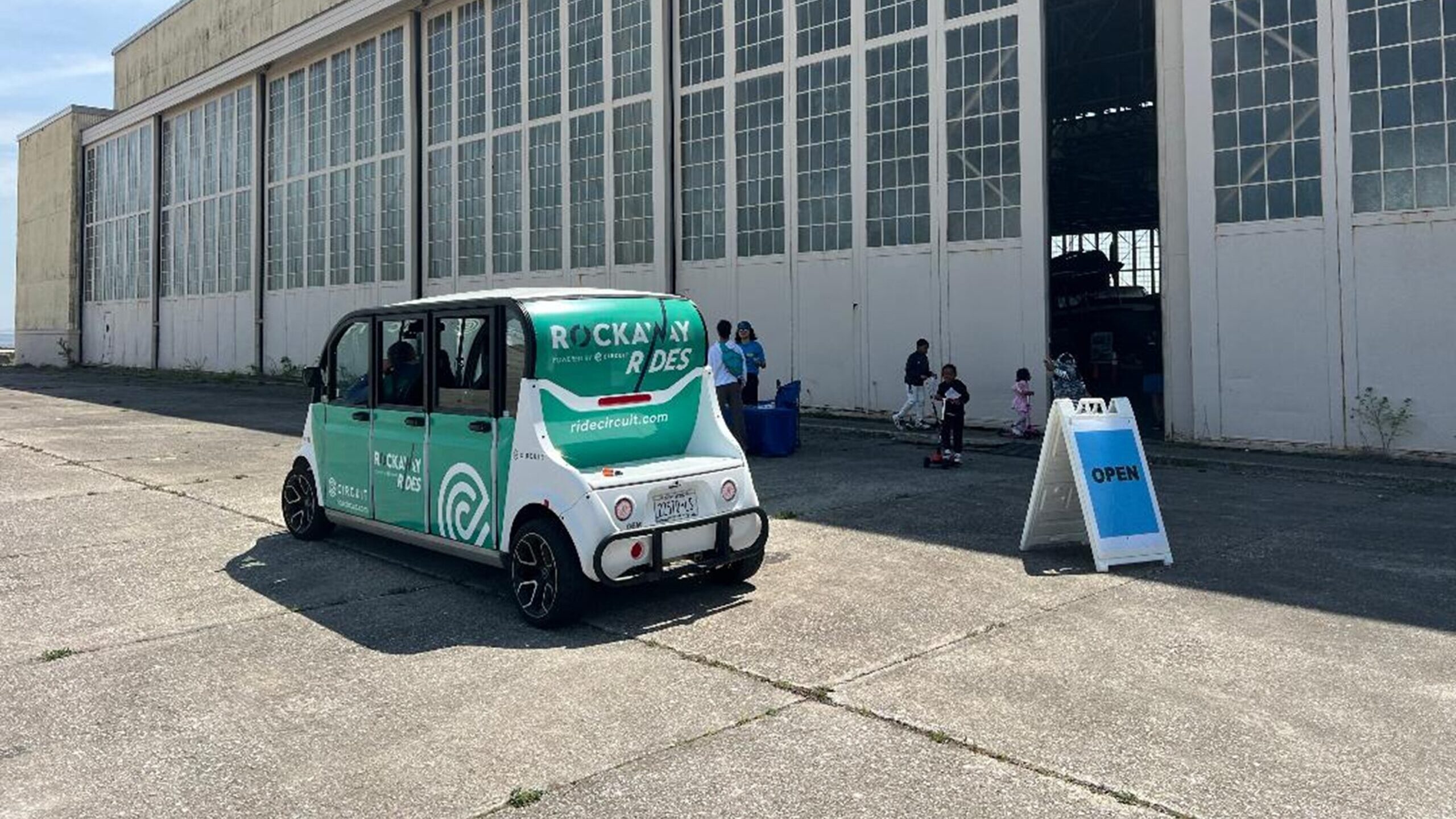
Circuit GEM Car
“The Circuit Shuttle service is a great idea and very helpful for getting around locally. Overall, it’s a convenient and eco-friendly option that makes transportation easier, and I’d love to see it continue expanding.”
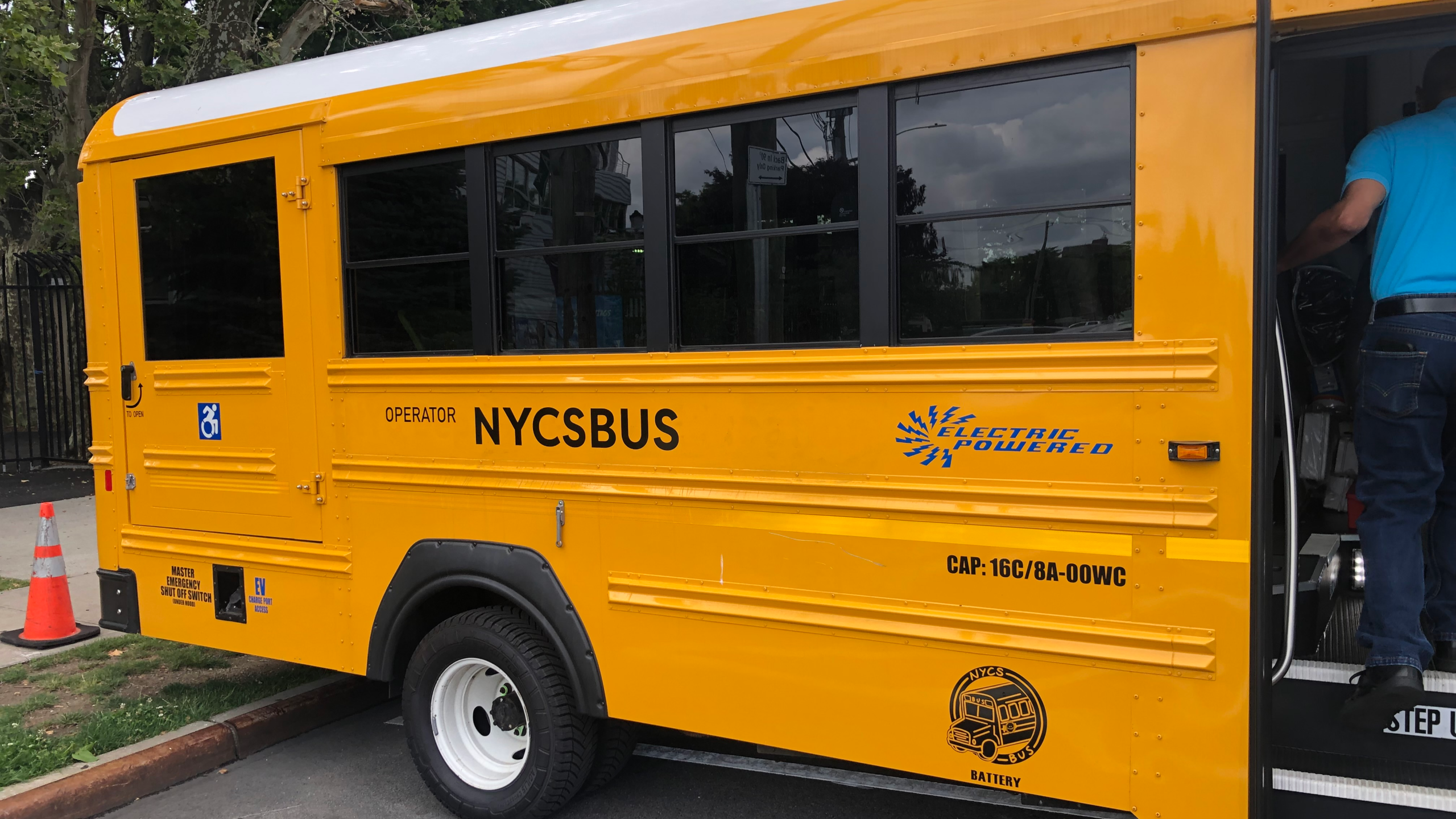
NYCSBUS ebus
The Electrifying School Buses in the Bronx and Beyond project represents the beginning of NYCSBUS electrifying its entire fleet by 2035, making sure kids breathe healthier air on their way to and from school.
Avoided Emissions
- Greenhouse Gas Emissions (GHG Emissions) are pollutants released from burning fossil and biogenic fuels. The GHG pollutants tracked in this program are carbon dioxide (CO2), nitrous oxide (N2O), and methane (CH4). Emissions are reported in metric tons of CO2 equivalents over a 20-year horizon.
- Avoided Emissions is the reduction in emissions from the use of a cleaner transportation option. Positive avoided emissions indicates an emission reduction and vice-versa. For example, if a trip is completed using an electric vehicle (EV) instead of a gasoline-powered vehicle, the avoided emissions are the difference between the emissions profiles of the two trips. If the original transportation option isn’t clear, a blended approach is used to estimate the avoided emissions.
- Electric Bicycle (e-bike) is a bicycle with an electric motor.
- Electric Vehicle (EV) is a vehicle (car, shuttle, van, truck, or bus) that can be powered by an electric motor. This term encompasses both battery electric vehicles and plug-in hybrid electric vehicles.
Community Outreach
- Project teams are one or more organizations that were awarded a grand prize through NYSERDA’s Clean Transportation Prizes.
- Outreach Activities are carried out by project teams to engage members of the local community. For the purposes of the dashboard, there are three categories of outreach activities:
- Broader meeting /community events are outreach events that allow project teams to promote their projects as part of larger events that have a broader focus. Examples include town hall meetings, conferences, fairs, and local events.
- Promotional activities are outreach activities that include social media and email campaigns, canvassing, tabling, text and phone banking, and printed materials like flyers and posters.
- Project-specific events are outreach events where project teams go deeper into their offerings and engage an audience interested in their specific project. These include community feedback sessions, roundtables, and webinars.
- Estimated people reached is the project teams’ estimated reach for each event or promotional activity. The categories include small reach (1 – 24 people), medium reach (25 – 49 people), large reach (50 – 99 people), and extra-large reach (100 or more people). There are specific outreach activities for which this information is not recorded, including broader meetings and community events, as well as certain promotional activities where it is too difficult to estimate the number of people contacted (e.g., tabling and paid media).
- Maximum estimated people reached is the highest value of the selected size category. For instance, if an event has a medium reach (25 – 49 people), its maximum is recorded as 49 people reached. The only exceptions are extra-large events (100 or more people), where the event is recorded as 100 people. For activities where the estimated people reached is unknown, the maximum estimated people reached is recorded as zero.
Disadvantaged Communities are defined by the New York State Climate Justice Working Group, criteria include relative burden associated with climate change, income, health, race, ethnicity, and housing. Projects implemented through NYSERDA’s CTP are focused on these communities.
Avoided Emissions
Project teams submit utilization data in a consistent format on a monthly or quarterly basis. These data includes information on vehicle miles traveled. The submitted utilization data are processed and validated to calculate avoided emissions. The metrics for utilization and emissions displayed on the dashboard are updated quarterly.
Community Outreach
Project teams report their outreach activities through a standardized form. The form includes both multiple choice questions and open-ended responses. The self-reported data are validated monthly and updated on the dashboard in the first week of each month.
Transportation Security Index
The Transportation Security Index (TSI) results show an abbreviated version of an index originally developed by the University of Michigan and Washington Center for Equitable Growth. The evaluation team asked a series of questions to users of the project services. These questions are designed to measure community members’ feelings about their transportation options and how secure they feel about those options. The evaluation team partnered with project teams to conduct surveys with service users several months after their services had been in operation. Respondents were asked to self-report their feelings related to transportation security both before and after project services became available to them.
- How can I interact with the dashboard?
Hover over elements throughout the dashboard to surface details, including key indicators and direct data values in charts. Click elements within a chart to cross-filter by your selection. At the top of a visual, a small question mark indicates additional help is available. - How do I reset the dashboard?
Go back to the default view by clicking “Reset View” at the top right of the dashboard. - Can I export the underlying data?
No data cannot be exported. - Is the dashboard compatible with keyboard navigation?
Yes. Keyboard shortcuts are available when you enter the dashboard. To navigate into the dashboard, press Ctrl + Enter and then select the “Skip to main content” link within the context menu to set focus to the top navigation bar with the Reset View and Help buttons. Once focus is on the top navigation bar, press enter.
To close out of Help Box using keyboard navigation press Tab, then press Enter, and then press Tab again to access the close help button.
To expand the rows of a matrix, you can press Shift + Right Arrow Key. You can see other commonly used keyboard shortcuts by pressing Shift + ? once you’ve navigated your cursor to being inside the dashboard. - What if I want to learn more about the New York Clean Transportation Prizes Initiative?
Visit the New York Clean Transportation Prizes Initiative website to learn more!
Subscribe to Receive the Latest News from Us
We’ll update you when we have something to share.


